

To River
A case for more verbs

In English, we have lots of nouns. Especially when we refer to nature. We write, talk about, and interact with a variety of people, places, things, and ideas, and as result, we view so much of what surrounds us as static instead of a dynamic ecosystem filled with entities that are active and alive.
I first read about noun vs. verb based languages in Robin Wall Kimmerer’s book, Braiding Sweetgrass. She talks about how many Indigenous languages have a much more interactive way of describing the natural world. Verb-based languages bring fluidity to the world that comes from conjugated action. The very things we think about and look at in nature become participatory members. With inherent activity they engage in a relationship with the world just as humans do. Hills, trees, rain and mountains exist in verb-form, grammatically enmeshed with the environment. If you were to imagine nature as a complex piece of music, English helps us read the score whereas a verb-based language allows us to be part of the score itself, surrounded by each contributor’s part.
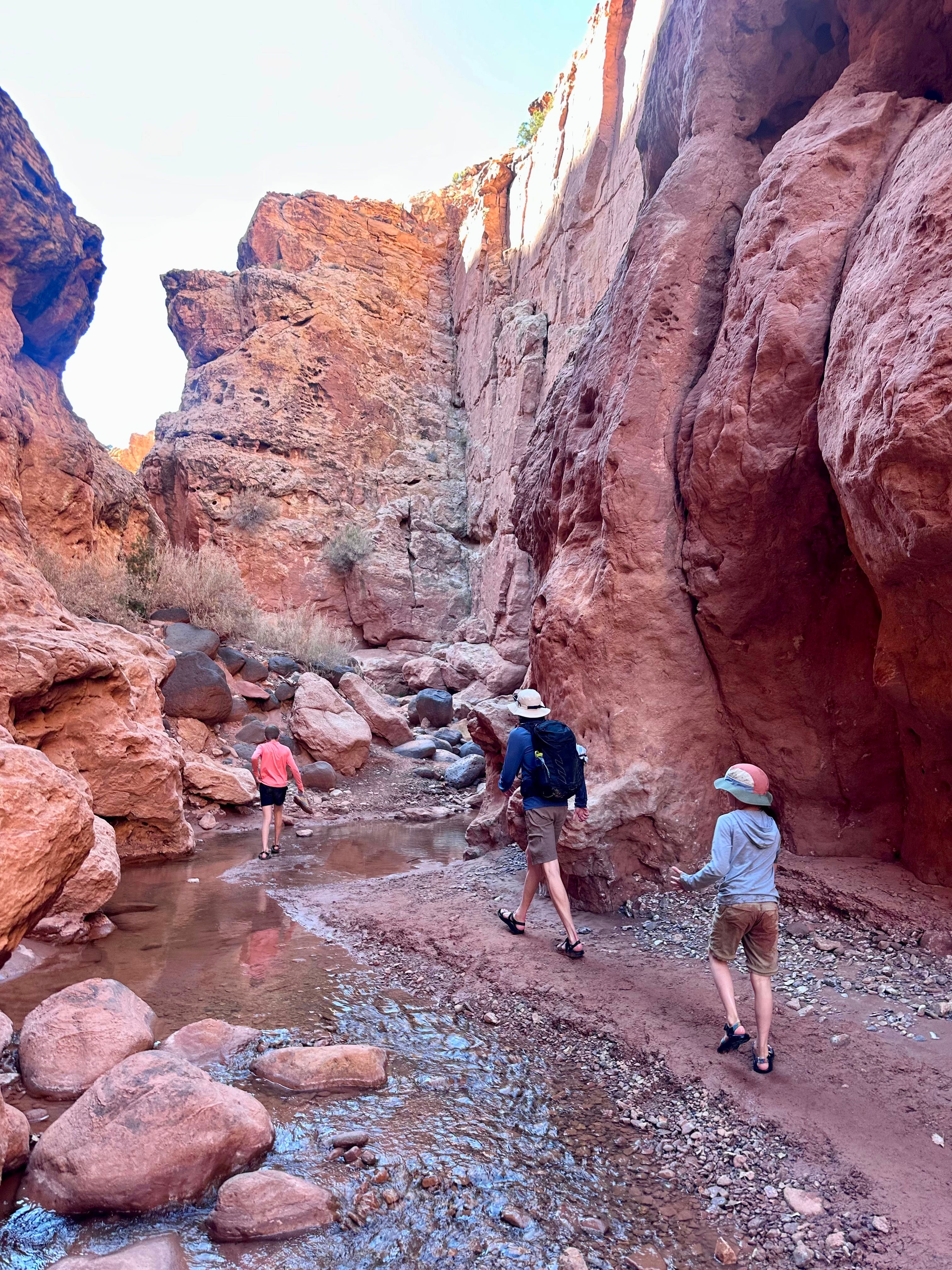
This past weekend, while hiking a slot canyon in the red-rock country of southern Utah, this idea crystalized. I couldn’t help but imagine myself rivering through the narrows just as water does - sluicing and slipping as it slides through the rock. This is what I was doing as I walked through. This canyon would not exist without water’s active participation. “Water rivers,” I thought. “I river.”
Currently reading Robert Macfarlane’s Is A River Alive, I was primed to think about water differently, and wandering through the desert, the answer to his title is an obvious YES! The entire ecosystem exists with and because of the river.
I find it fascinating that our words and how we structure them shape our perception of and interaction with the world around us. Of course this is true, but never before had I thought about this so clearly. As a native English speaker, entrenched in way of thinking and speaking, it’s going to take practice to shift my foundational understanding.
Wouldn’t it be powerful if we could all shift our thinking just a little bit? To imagine the nouns around us as verbs - each engaging uniquely and independently with our shared environment. If you could conjugate any noun, what would you pick?
I love this! I also like the idea of love as a verb - the act of loving someone no matter how you feel about them. Like you can "love" a spouse and still treat them poorly, or you can be feeling pretty annoyed with a spouse and still "love" them with empathy and service.